Shri Shiv Aarti
श्री शिव जी की आरती
See all Shiva content →ॐ जय शिव ओंकारा, स्वामी जय शिव ओंकारा। ब्रह्मा विष्णु सदाशिव, अर्द्धांगी धारा॥ एकानन चतुरानन पंचानन राजे। हंसासन गरुड़ासन वृषवाहन साजे॥ दो भुज चार चतुर्भुज दसभुज अति सोहे। त्रिगुण रूप निरखते त्रिभुवन जन मोहे॥ अक्षमाला वनमाला मुण्डमाला धारी। त्रिपुरारी कंसारी कर माला धारी॥ श्वेताम्बर पीताम्बर बाघम्बर अंगे। सनकादिक गरुणादिक भूतादिक संगे॥ कर के मध्य कमण्डलु चक्र त्रिशूलधारी। सुखकारी दुखहारी जगपालनकारी॥ ब्रह्मा विष्णु सदाशिव जानत अविवेका। प्रणवाक्षर के मध्ये ये तीनों एका॥ लक्ष्मी व सावित्री पार्वती संगा। पार्वती अर्द्धांगी, शिवलहरी गंगा॥ पर्वत सोहैं पार्वती, शंकर कैलासा। भांग धतूर का भोजन, भस्मी में वासा॥ जटा में गंगा बहत है, गल मुण्डन माला। शेष नाग लिपटावत, ओढ़त मृगछाला॥ काशी में विराजे विश्वनाथ, नन्दी ब्रह्मचारी। नित उठ दर्शन पावत, महिमा अति भारी॥ त्रिगुण स्वामी जी की आरती जो कोई नर गावे। कहत शिवानन्द स्वामी मनवांछित फल पावे॥ ॐ जय शिव ओंकारा, स्वामी जय शिव ओंकारा। ब्रह्मा विष्णु सदाशिव, अर्द्धांगी धारा॥
Meaning
"Om Jai Shiv Omkara" is the most widely sung aarti to Shiva, traditionally attributed to Shivanand Swami. It addresses Shiva as Omkara — the primordial sound — and recalls Brahma, Vishnu and Sadashiv as one supreme reality held within the syllable Om. Its verses describe his form: one, four and five faces, the bull he rides, the garland of skulls, the tiger skin, the kamandalu and trident in his hands, the Ganga flowing through his matted hair and the serpent coiled at his neck. It pictures him on Kailash with Parvati, living on bhang and datura, smeared with ash, and closes with Vishwanath enthroned at Kashi with Nandi. It is sung at daily Shiva puja, on Mondays, and at Maha Shivratri.
Benefits
- 🪷A central part of Monday and Pradosh vrat worship
- 🪷Sung during each of the four prahars of Maha Shivratri puja
- 🪷Sung to conclude a Rudrabhishek or Shivling puja
- 🪷Traditionally sung to quiet restlessness and fear of mind
Chanting Method
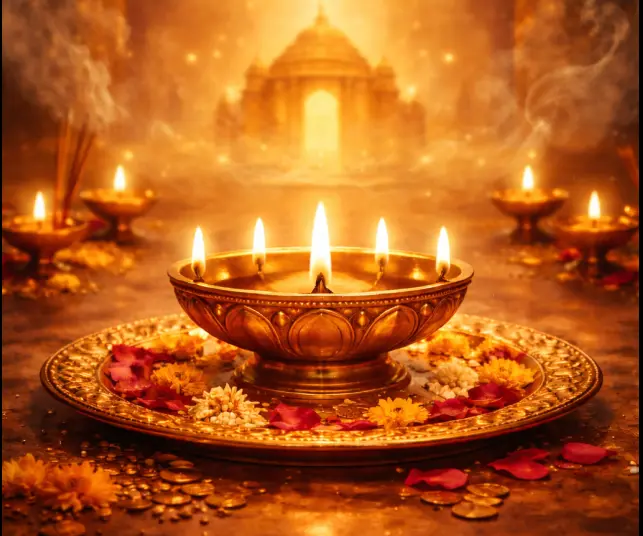
Light a ghee lamp and incense before a Shivling or an image of Shiva. After offering bilva leaves, water and white flowers, sing the aarti while circling the lamp clockwise. Sounding a conch at the close is considered auspicious.
Best Time
Mondays, the pradosh hour at dusk, and the night of Maha Shivratri are considered most auspicious.