Shri Ganesh Aarti
श्री गणेश जी की आरती
See all Ganesh content →जय गणेश जय गणेश जय गणेश देवा। माता जाकी पार्वती पिता महादेवा॥ एकदन्त दयावन्त चार भुजा धारी। माथे सिंदूर सोहे मूसे की सवारी॥ पान चढ़े फूल चढ़े और चढ़े मेवा। लड्डुअन का भोग लगे संत करें सेवा॥ अंधन को आँख देत कोढ़िन को काया। बांझन को पुत्र देत निर्धन को माया॥ दीनन की लाज राखो शंभु सुतवारी। कामना को पूर्ण करो जग बलिहारी॥ सूर श्याम शरण आए सफल कीजे सेवा। माता जाकी पार्वती पिता महादेवा॥ जय गणेश जय गणेश जय गणेश देवा। माता जाकी पार्वती पिता महादेवा॥
Meaning
This aarti praises Shri Ganesh — son of Parvati and Mahadev, and the remover of obstacles. Its verses describe his form: the single tusk, four arms, the sindoor on his forehead and the mouse he rides, and recall that he grants sight to the blind, a healed body to the leper, wealth to the poor and children to the childless. The closing verse carries the signature of the poet "Soor Shyam", who offers himself at Ganesh's feet. Because Ganesh is invoked before all other deities, this is the aarti sung first at any puja, ceremony or new beginning.
Benefits
- 🪷Sung at the start of any new venture, puja, or housewarming
- 🪷Traditionally sung to clear obstacles and hindrances (vighnas)
- 🪷A central part of Ganesh Chaturthi and Wednesday worship
- 🪷Singing it together as a family is felt to bring auspiciousness into the home
Chanting Method
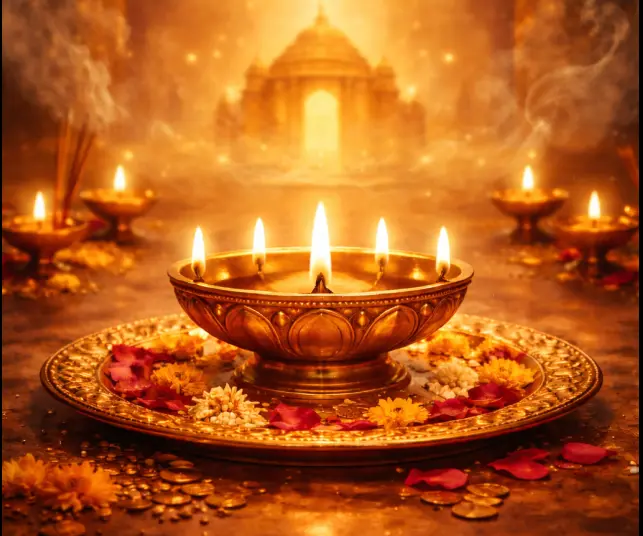
Light a ghee or oil lamp before an image of Ganesha. Sing the aarti while circling the lamp clockwise with your right hand. Afterwards, pass your hands over the flame and touch them to your forehead, then offer laddus or modaks as bhog.
Best Time
Wednesdays and Ganesh Chaturthi are especially auspicious; otherwise it may be sung at morning or evening puja on any day.